
Space Applications & Qualification
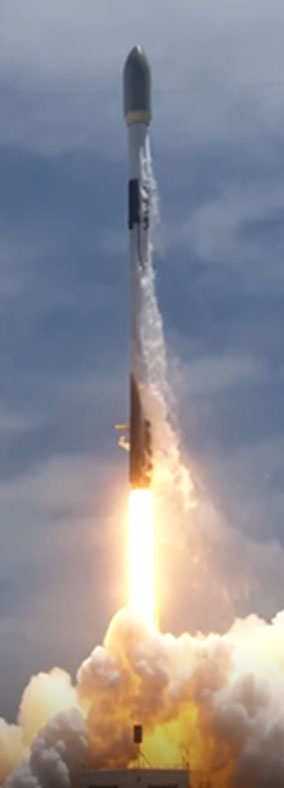
These activities focus on leveraging novel oxide‑semiconductor‑based solutions for the following critical space applications:
- Monitoring the Earth’s climate from space (TRL 7–8)
- Early stage detection and localisation of wildfires from high altitude (TRL 4–5)
- Eliminating satellite glare to preserve the night sky from light pollution (TRL 2–4)
- Boosting spacecraft solar panel efficiency through improved UVA capture (TRL 2–4)
1. Monitoring the Earth’s Climate from Space
A key driver of Nanovation’s space activities was the adaptation of its Aluminium‑Gallium‑Oxide (Al)Ga₂O₃‑based UVC photodetectors for monitoring of the Herzberg continuum (200–242 nm) from space. This is a key, but challenging‑to‑study, spectral region, and a critical component of the Earth’s radiation balance.
Because UVC radiation is absorbed by the ozone layer in the upper atmosphere, space‑based observation is the only way to pursue the long‑term studies required to understand, monitor, and quantify impacts on the Earth’s climate.
Nanovation’s (Al)Ga₂O₃ sensors were adapted for this mission in a three‑year project funded by the French Agence Nationale de la Recherche (“DEVINS” programme).
As part of this development, the photodetectors underwent stringent qualification‑oriented testing under simulated space conditions, focused on stability, reproducibility, and long‑term robustness:
- Thermal cycling: repeated cycles over 230 K to 340 K, representative of orbital temperature variations
- Vacuum operation: evaluation of stability and repeatability under low‑pressure conditions
- Mechanical resistance: wire bond pull tests compliant with MIL‑STD‑883
- Vibration: sinusoidal & broadband excitation from a few Hz to several kHz, consistent with launch conditions
These tests established excellent device reliability and stability under representative mission constraints.
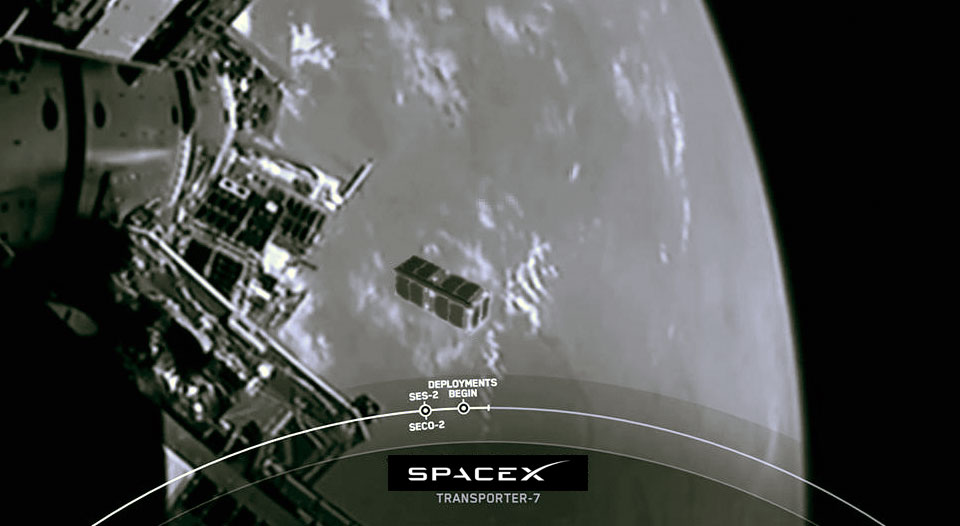
The sensors were subsequently launched in 2023 aboard SpaceX Transporter 7 and deployed on the UVSQ INSPIRE Sat 7 CubeSat, where they have since been enabling successful in‑orbit monitoring of the Herzberg continuum, and validating the long‑duration robustness and radiation resistance of the sensors in the harsh space environment.
2. High Altitude Wildfire Sensing and Localisation
Nanovation was funded (through the European Space Agency “PROMETHEUS” project) to develop a prototype (Al)Ga₂O₃‑based solar‑blind UVC imaging system for early detection and localisation of fire ignition events from high‑altitude platforms.
Concept and system approach
This solution exploits the fact that weak UVC emission from flames can be unequivocally detected at long range, as the sensors are intrinsically immune to solar background signals. This enables reliable remote optical identification of ignition events.
However, because a UVC imaging array alone provides limited spatial context, the system combines:
- solar‑blind UVC imaging
- visible‑spectrum imaging for localisation and scene context
This approach enables robust detection together with accurate localisation, where the visible channel provides the spatial reference required to interpret the UVC signal.
Prototype demonstration
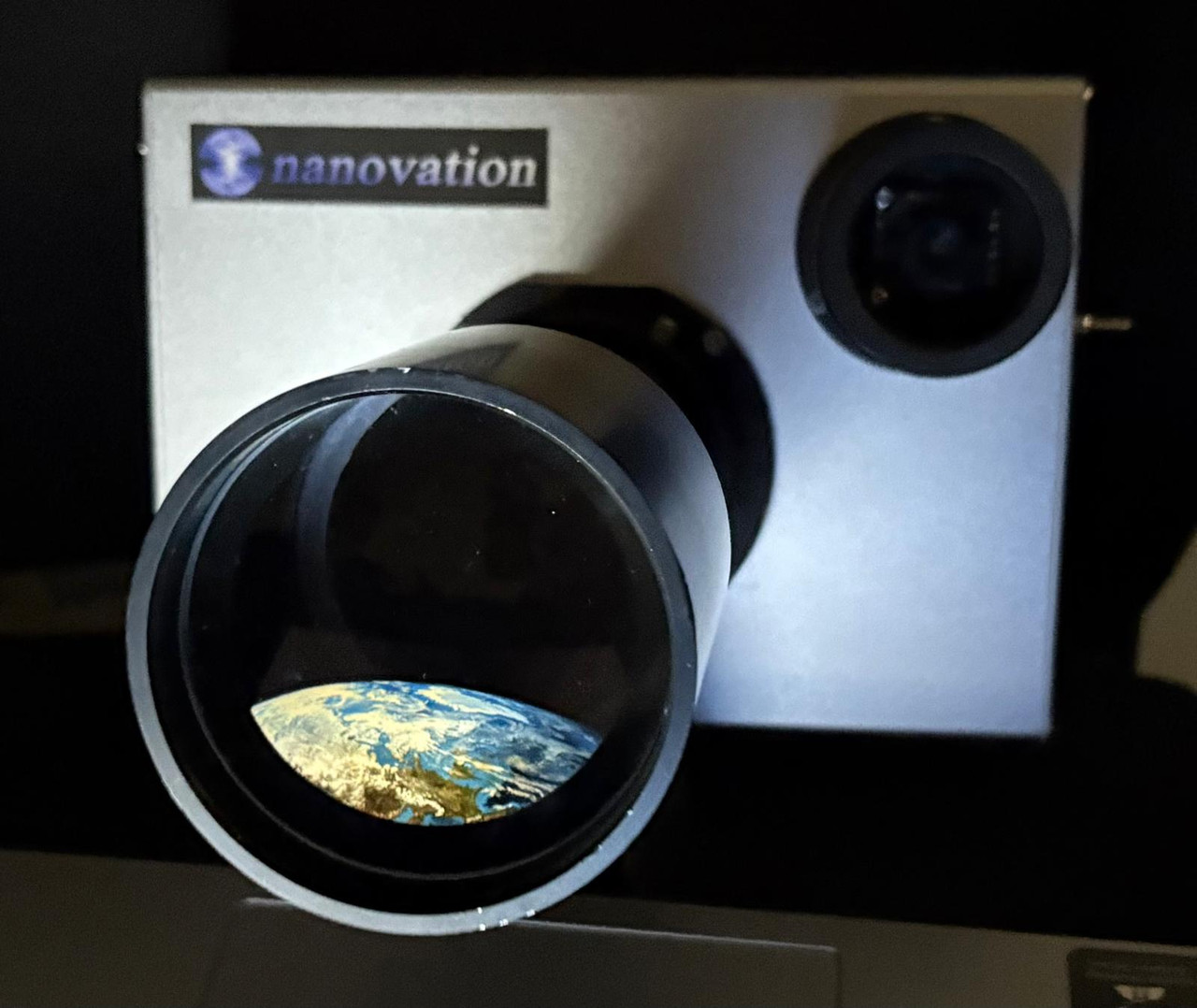
As part of this programme, a fully integrated UVC/VIS fusion imaging video camera prototype was developed and demonstrated, including:
- a (Al)Ga₂O₃‑based UVC detector array
- a dedicated UV optical system and readout electronics
- real‑time fusion of UVC and visible video streams
Field tests of the prototype system successfully demonstrated:
- accurate localisation of a UVC emission source located at distances > 100 m
- complete immunity to direct sunlight interference
- real‑time detection and localisation capability
Relevance for broader space applications
This work establishes a pathway toward solid‑state alternatives to incumbent photomultiplier‑based detection systems in applications requiring low background noise and high selectivity.
While initially developed for fire sensing, this work demonstrates a first‑generation solid‑state solar‑blind UVC imaging system, opening the way for a range of space‑based sensing and imaging applications beyond the PROMETHEUS use case.
Because ozone in the upper atmosphere blocks UVC radiation, only space‑based operation can access this portion of the spectrum.
In this context, the demonstrated system provides a foundation for:
- solar physics and space‑weather monitoring, where UVC imaging reveals high‑energy processes in the solar corona and chromosphere
- atmospheric and planetary science, through detection of ozone and trace gases via spectral signatures
- ultraviolet astronomy, targeting hot stars, ionised gases, and energetic astrophysical phenomena not visible at other wavelengths
- spacecraft monitoring and contamination tracking, through detection of surface degradation and UV‑induced effects
- instrument calibration and astrobiology studies, where controlled UVC sources and flux mapping are required
More broadly, this work demonstrates the feasibility of compact, low‑power solid‑state UVC imaging systems, positioning them as a credible alternative to legacy ultraviolet detection approaches in future space missions.
3. Eliminating Satellite Glare to Preserve the Night Sky
The rapid deployment of satellite constellations in recent years has created significant challenges due to sunlight reflected from satellite surfaces, disrupting ground‑based astronomical observations and night‑sky visibility.
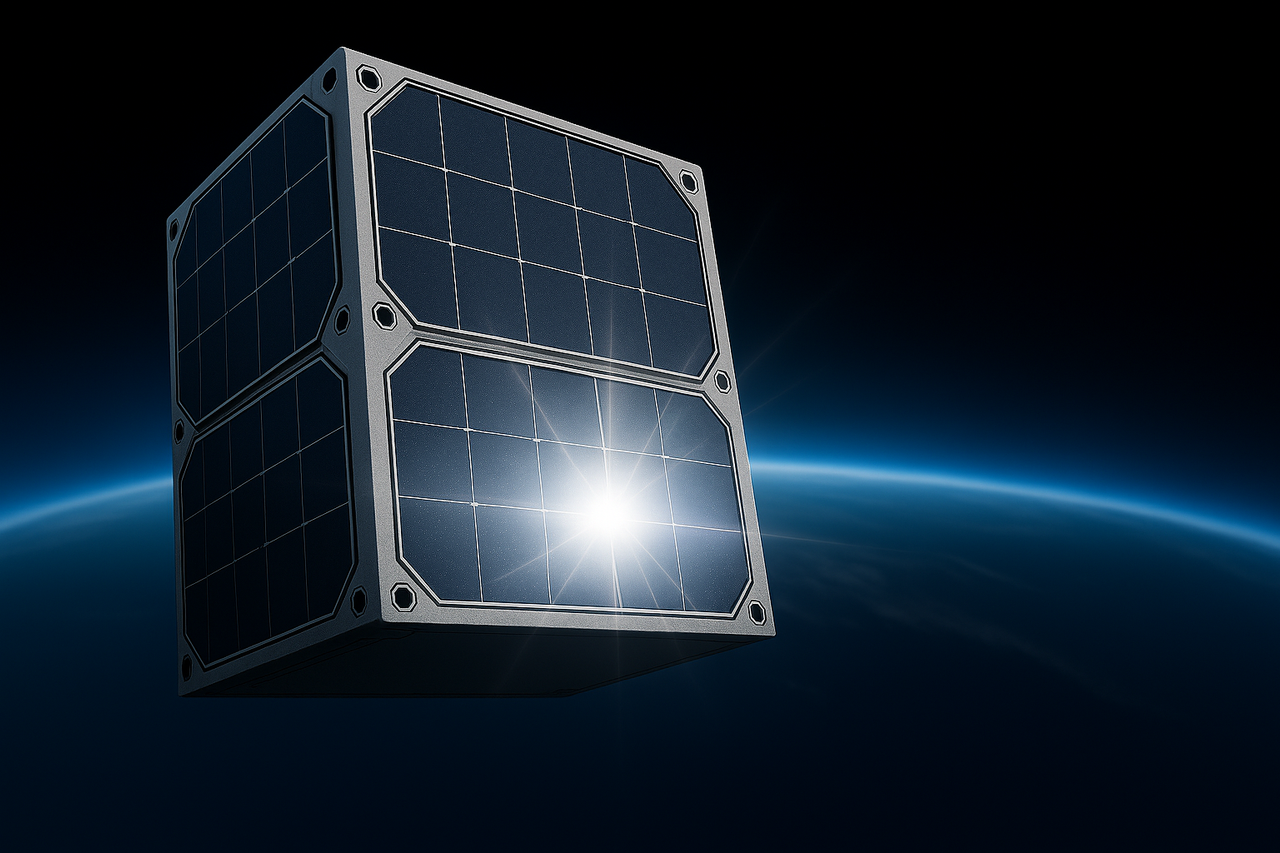
To address this issue, Nanovation has developed ZnO‑based nanostructured anti‑glare coatings, designed to suppress specular reflection and reduce sunlight reflected back toward Earth.
A key innovation of this approach is that the coating is selectively deposited only on the most reflective elements of the satellite, in particular metallic features such as solar panel bus bars, which are dominant sources of glare.
This is achieved through a patented deposition process, in which ZnO nanostructures preferentially form on metallic regions. As a result only the reflective parts of the system are modified
This represents a targeted, materials‑level solution to satellite light pollution, fundamentally different from conventional anti‑reflection coatings.
4. Boosting Space PV Efficiency Via Improved UV Capture
Nanovation has shown that the enhanced UVA transparency of (Al)Ga₂O₃‑based transparent electrodes can significantly improve the efficiency of solar cells compared to conventional transparent conductor electrodes.
While initially studied for terrestrial photovoltaic applications, this property is even more relevant for space‑based solar panels, where the solar spectrum contains a significantly higher ultraviolet fraction than at the Earth’s surface.
This approach opens pathways toward more efficient solar panels in space, where energy harvesting is a key limiting factor and access to a greater proportion of energy in the ultraviolet part of the spectrum represents a major advantage.
Emerging Directions: X-Ray & High Energy Photon Detection
In parallel with UVC developments, Nanovation is developing (Al)Ga₂O₃‑based detectors for X‑ray and high‑energy photon detection, currently at the laboratory demonstrator stage.
These devices exhibit low dark signal and high sensitivity under low photon flux conditions, characteristics that are particularly relevant for space‑based scientific instrumentation, where signal levels are often limited.
While still at an early stage of maturity, this work opens potential pathways toward:
- compact X‑ray detectors for small satellite missions
- low‑flux scientific instrumentation for planetary and deep‑space studies
- radiation detection and monitoring systems
These developments represent a longer‑term extension of Nanovation’s oxide‑semiconductor platform toward high‑energy sensing applications in space.
SEE INFORMATION ON NANOVATION’S CASSINI CHALLENGES APPLICATION HERE: